Last updated: July 2026 · reviewed by Coach Jay, 35+ year teaching pro.
Kick Serve · Lesson + AnalysisKick Serve Lesson: How to Hit a Kick Serve That Actually Kicks
A kick serve is a heavy-topspin serve: the racquet brushes up and across the back of the ball from a toss placed over your head, so the ball clears the net high, dips into the box, and jumps up and sideways off the bounce. It is the safest full-speed second serve in tennis — and the shot that ends double faults.
Why is the kick serve worth learning?
Because it changes the math of your whole service game. With a reliable kick serve you can swing at full racquet-head speed on second serve — the spin buys you a huge net clearance and still pulls the ball down into the box. That means no more decelerating, no more pushed second serves that get attacked, and far fewer double faults under pressure. As a bonus, a good kick climbs above your opponent's shoulder on the bounce, which most club players — and most one-handed backhands at every level — genuinely hate.
What actually makes the ball kick?
Spin — and only spin. There is no magic in the racquet or the strings. Three things have to cooperate:
- The toss: more over your head than a flat serve — slightly behind your hitting shoulder. If your toss drifts out front, upward brushing contact becomes physically impossible; the serve flattens out no matter what you intend.
- The swing path: the racquet drops fully below the ball, then brushes up and across its back — roughly from 7–8 o'clock toward 1–2 o'clock on the ball face. Your body stays more sideways through contact than on a flat serve.
- Racquet-head speed: the counterintuitive one. A kick serve needs more swing speed than a flat serve, because most of that speed becomes spin instead of pace. Players who slow down "for control" are removing the exact ingredient that creates the control.
Add a continental grip (or slightly toward eastern backhand), a full racquet drop, and a finish that lets the racquet travel across your body, and the ball starts jumping.
Why doesn't your kick serve kick?
In 35+ years of teaching, Coach Jay sees the same four culprits over and over: a toss drifting in front, a grip creeping toward the forehand, a racquet drop that never gets below the ball, and a decelerating swing. The problem is that from inside the motion they all feel the same — the ball just "doesn't kick." On video, each one looks completely different, which is why filming your serve is the fastest route to fixing it.
Start with the serve foundation
The kick serve is built on top of sound basic serve mechanics — stance, toss, trophy position, racquet drop, contact, follow-through. Coach Jay's full free serve lesson covers that foundation step by step:
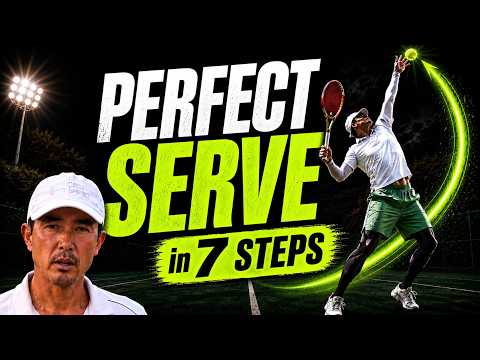
▶ How to Hit the Perfect Tennis Serve in 7 Simple Steps — Coach Jay on YouTube. More serve content is on the Tennis Ninja channel.
Get your kick serve analyzed on video
Reading about the kick serve tells you what should happen. A serve video analysis tells you what is happening in your motion — which of the four culprits is killing your kick, and the one correction to train first. Film 5–10 serves from the side and from behind, paste a share link, and pick a review: $89 Quick, $149 Detailed, or $249 Full — see pricing.
Have a kick serve question?
What makes a kick serve work
- A toss placed over the head, not out in front
- A continental (or backhand) grip, never a forehand grip
- A low-to-high brush-up path across the back of the ball
- Leg drive and back arch that load topspin, not a flat swing
Coach Jay’s method is grounded in tennis physics, physiology and psychology. Further reading: peer-reviewed topspin (kick) serve biomechanics research on PubMed (U.S. National Library of Medicine).